


Keeping personal and business finances separate is an important part of maintaining clean and reliable bookkeeping. However, personal transactions can sometimes appear in a business bank or credit card account. If these transactions are incorrectly recorded as business expenses, they can distort expenses, profit, financial statements, and tax-related records.
This guide explains how to identify personal transactions, determine the appropriate accounting treatment, and correct the books without creating duplicate or misleading entries.
1. What Are Personal Transactions?
- A personal transaction is a purchase, payment, withdrawal, or other financial activity that is unrelated to the operation of the business.
- Examples include personal groceries, clothing, entertainment, household bills, personal travel, family expenses, and personal subscriptions.
- A transaction appearing in a business bank or credit card account does not automatically make it a business expense.
- The key question is whether the transaction has a legitimate business purpose.

2. Why Personal Transactions Create Problems
- If a personal purchase is incorrectly categorized as a business expense, business expenses become overstated and reported profit can become understated.
- Repeated misclassification can distort the Profit & Loss, owner’s equity, financial analysis, cash-flow interpretation, and tax-related records.
- The bank balance may still be correct while the accounting classification is wrong.
3. How to Identify Personal Transactions
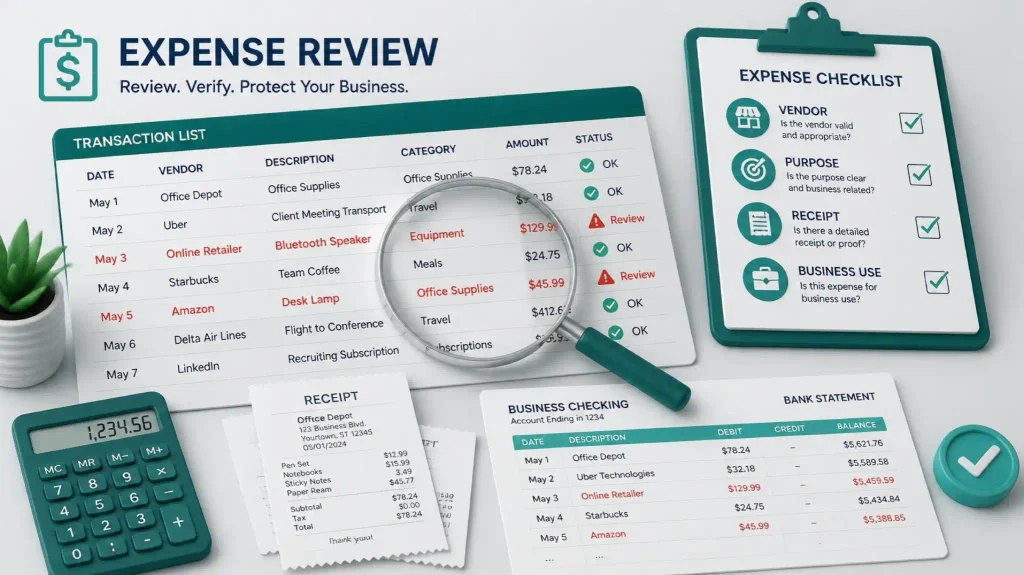
- Review business bank and credit card transactions for items that do not have a clear connection to business activity.
- Consider the vendor, description, amount, date, transaction type, receipt, and stated business purpose.
- For questionable transactions, verify what was purchased and why it was paid from the business account.
- Do not classify an unclear transaction as a business expense until its purpose has been established.
4. How to Correct Personal Transactions
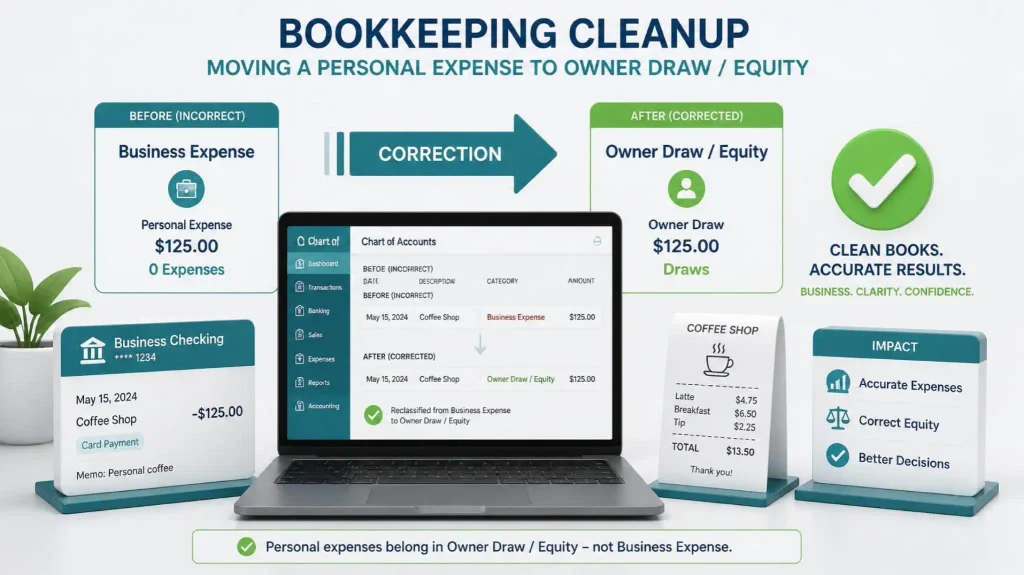
- Once confirmed as personal, remove the transaction from the incorrect business expense category.
- The appropriate treatment may involve an owner draw/distribution or another suitable account, depending on the business structure and circumstances.
- Do not simply delete a transaction that actually occurred through the business bank or credit card account.
- After correction, review the affected financial statements and confirm that no duplicate transaction has been created.
5. Owner Draw vs. Owner Contribution
- Owner Draw / Distribution: business funds used by the owner for personal purposes may be recorded as an owner draw or distribution, depending on the entity and circumstances.
- Owner Contribution: when an owner puts personal funds into the business or personally pays a legitimate business expense, the transaction may be treated as an owner contribution or another appropriate account.
- The correct treatment depends on the business structure and the specific transaction.
6. When the Owner Personally Pays a Business Expense
- A transaction paid from a personal account is not automatically a personal expense.
- If the purchase has a legitimate business purpose – such as business software, office supplies, advertising, business travel, or equipment – it may still belong to the business books.
- The important distinction is: Personal payment method does not necessarily mean personal expense.
- Keep supporting documentation and record the transaction according to the business’s accounting process.
7. How to Prevent Personal and Business Transactions From Mixing
- Maintain separate business bank and credit card accounts.
- Use business payment methods for legitimate business expenses whenever possible.
- Review transactions regularly instead of waiting until year-end.
- Keep receipts and explanations for business-related purchases.
- Create a consistent process for owner contributions, draws, reimbursements, and personal transactions.
Personal transactions in business books may seem minor, but repeated misclassification can gradually distort the financial picture of a business. The safest approach is to properly separate business expenses, owner activity, and equity to ensure your financial reports remain reliable and trustworthy.